At the end of August 2024, the German Bayern Munich
basketball team announced that its next season's games will use LED glass floor
tile screens in the main stadium. Previously, it was not new for individual
basketball courts to use LED floor screens. However, this is the first time
that a team has used floor screens for a long time according to the season.
Long-term use of LED floor screens obviously requires more support for
"technology, investment and business model" innovation. Industry
analysts believe that this may create new business opportunities for the
combination of LED screens and sports.
LED + Sports: From advertising fences to large floor screens
In February this year, the US NBA All-Star Game decided to be
held on a brand new LED court. The colorful LED floor screen brings additional
benefits to both the viewing and broadcasting of the game. It has become
another example of the combination of LED screens and sports. It is reported
that its LED court solution comes from a German company, and the LED screen
products use my country's Absen PL series products.
Traditional LED large-screen sports applications mainly
include three levels: the first is rigid demand, such as LED scoreboards. The
large screen and high brightness of the LED screen ensure that the audience and
the broadcast can clearly see the scoring, timing and refereeing. The second is
the on-site LED playback screen. This application not only provides clearer
details for the audience in the back row, but also can replay multi-angle
images during the game to increase the fun of appreciation or play advertisements.
——The above two applications are more from the perspective of
"better games" and "better appreciation of games". In terms
of commercial sports, its greater value lies in enhancing the live viewing
experience and thus attracting more live audiences.
The third combination of LED large screens and sports is the
"fence screen" commonly seen in football and basketball fields. The
main purpose of this screen is "sponsorship advertising". The 2024
European Cup also used VAR technology for the first time. That is, the display
screen not only provides on-site advertising, but also provides "content
replacement identification points" - that is, on-site audiences and
broadcast and live audiences in different regions can see completely different
advertisements. VAR technology increases the "commercial value
potential" of fence advertising screens, which is equivalent to increasing
the rigid demand for this application.
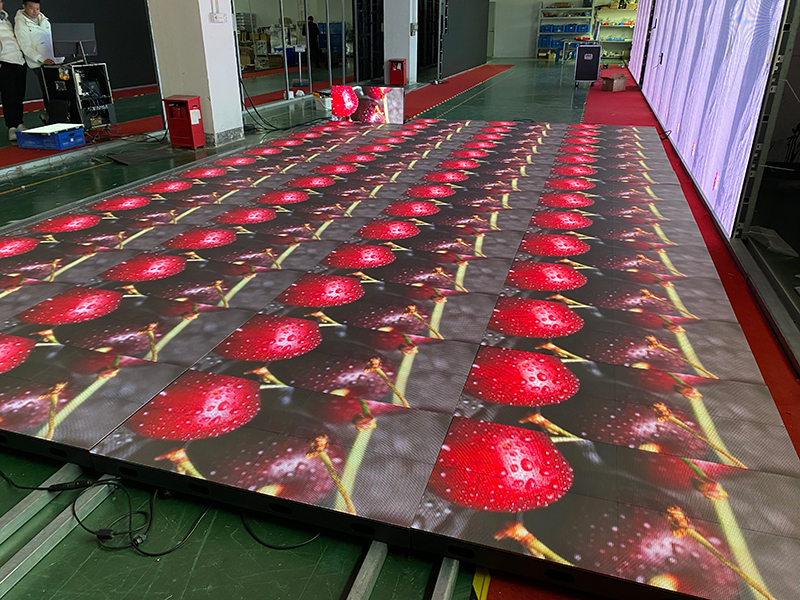
As for the "floor screen" that basketball courts
are currently trying, it can be said to be the culmination of the above three
functions: it can not only display field lines, field advertisements, and
replace advertising logos with VAR technology, but also display scoring, replay
game scenes, and even become the background stage for cheerleading - because it
is directly on the floor of the competition venue, in the special "C"
position of watching the game, the commercial value of this screen is the
"greatest".
From the perspective of industry insiders, the NBA and
European basketball circles use LED floor screens more to improve the
experience of watching games on site and live broadcasts, as well as to explore
more commercial value opportunities. That is, this is an additional tool for
making money! This is of course good news and a good choice for commercial
sports.
Constantly "stepped on", LED floor screens have
"stronger technical requirements"
Whether it is a scoring screen, a replay screen or a fence
advertising screen, these LED display facilities are in a "relatively safe
position" in the stadium. Although the fence screen may occasionally
collide with a football or basketball, the intensity of such collision is not
great and the number of collisions is relatively limited, so the impact of
partial damage to the fence screen on the game and advertising is very small.
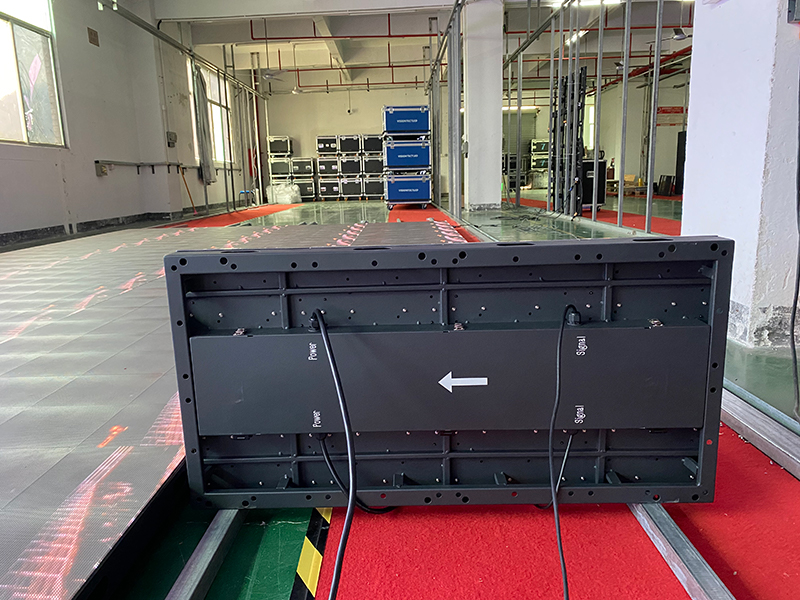
However, the "collision" that floor screen LED
equipment has to withstand is completely different. "Traditional LED
displays should avoid bumps; floor screens are born for bumps." Compared
with traditional stage floor screens, the intensity and frequency of bumps in
the stadium are bound to be higher. Moreover, as the "C position of the
event", the local failure of this floor screen has a greater impact on the
game and viewing - for example, a partial black screen, resulting in incomplete
field markings, etc., directly affecting the game. Therefore, the LED floor
screen used for sports competitions must have extremely high requirements in
terms of strength, stability and reliability.
On the other hand, different competitions have different
requirements for the "physiological characteristics" of LED floor
screens. For example, the basketball court requires the LED large screen to
simulate the hardness, strength, elasticity and toughness of the wooden floor.
This is a special and necessary new requirement beyond the display. It is
reported that the 2024 NBA All-Star Game, the LED floor screen is designed in
the form of a double-layer glass embedded LED screen, which provides strength
and friction simulation of the wooden floor through special glass, and further
simulates the deformation and elastic characteristics of the wooden floor
through the added layer structure.
Of course, as a professional event and commercial operation,
the LED floor screens that add extra costs to sports events must have a
"feasible input-output ratio": in this regard, LED floor screens
provide not only new advertising space, but also customizable regional
advertising experience for global broadcasts brought by VAR technology.
On the other hand, LED floor screens can also participate in
"game refereeing" and "athlete training". That is, by
adding more sensors to the LED floor screen, many data such as athlete
position, whether they cross the line, stay time, and force generation methods
can be collected and provided to the referee and athlete coach. That is, LED
floor screens are not only a "display tool" for the future of sports,
but also a "data collection tool" to form more rigid demand value.
In this regard, industry insiders believe that for commercial
events, LED floor screens may be more important, more rigid and more popular
than "fence advertising screens" in the future. In terms of on-site
advertising, game signs, replays, AR interactions, AI training, etc.,
especially the entire venue no longer has different friction areas caused by
"traditional advertising stickers", and can form overall consistency,
which is very beneficial to the safety and fairness of the game. For the sports
industry, this is a new supply that is emerging.
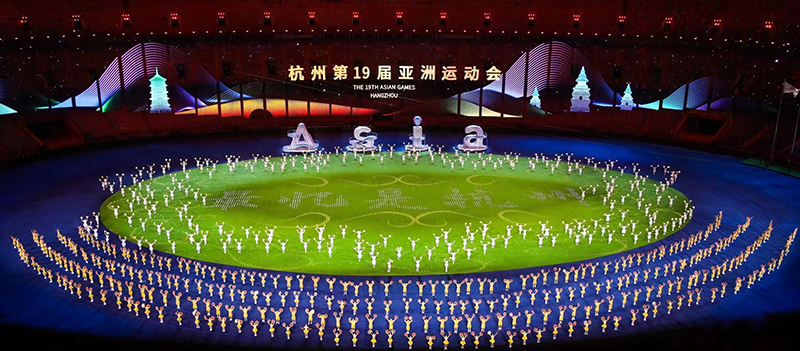
LED large screens and sports are accelerating their
integration, requiring more digital application innovations
The 2024 European Cup will use VAR technology for the first
time to provide customized advertising services for the regional broadcast
market. This is not only an innovation in the business model, but also one of
the signs of the further integration of digital technologies such as AI with
sports.
Including the Hawkeye referee system and VAR advertising
technology, it represents the continuous digitalization and intelligent
development direction of sports. From this perspective, as a typical digital
scene technology, the innovation of LED large screens in the future will never
stop. Fence screens can obtain more commercial value through VAR technology,
and LED large screens that integrate more AI, sensors, and interactive
technologies will also create more "miracles" in other subdivided
spaces.
In the field of basketball, in 2021, the 3×3 basketball game
held in the Ruhr area of Bochum, Germany
became the world's first game to use LED glass floor tile screens; and in 2024,
the US NBA All-Star Game will achieve the first "full-process commercialization"
of LED floor tile screen applications. In addition, in terms of competition
rules, in 2022, the International Basketball Federation (FIBA) officially
approved the use of LED floors in the stadium to obtain new opportunities for
watching, organizing, broadcasting and advertising events. In 2023, the LED
floor screen will serve the FIBA U19 Women's
Basketball World Cup, which is its first appearance in a global competition. In
the 2024-2025 season, the German Bayern Munich basketball team and the Greek
Athens Panathinaikos basketball team will realize the full-season home LED
floor screen competition for the first time...
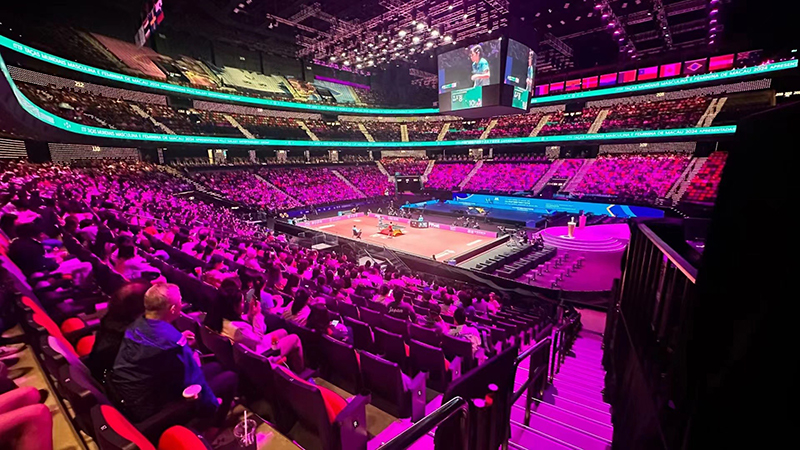
It can be seen that the application of LED floor screens in
sports has quickly gone through the development process of trying out new
things, commercial attempts, and redefining rules to the current standardized
use of professional events. Industry analysts believe that in the future, in
addition to basketball, games with strong viewing appeal, such as tennis and
volleyball, are expected to welcome LED floor screens. Table tennis, snooker,
etc. can also welcome LED tables. In addition, for "skill-based" projects
such as gymnastics and diving, how to use AI sensor LED large-screen facilities
in training is also an area that can be developed and innovated.
"Provide new training facilities and methods for sports,
develop data-based, creative sensors, and interactive LED facilities; provide
venue screens for professional events to enhance commercial development
potential and appreciation..." The combination of LED large screens and
sports will achieve a new leap and upgrade with the help of more digital
technologies. This will definitely be a large market segment with
differentiated innovation in the LED industry, and also a high-premium,
high-value-added market for high-end applications.

 OE P1.9/P2.6/P2.9Item Number: P1.9/P2.6/P2.9
 OH P3.9/P4.8OH P3.9/P4.8
 OB Plus P5/P6/P10Outdoor LED Screen P5.7/P6.67/P8/P10 Brightness:5500-10000nits Cabinet size:960W×960H mm
 Indoor TransparentCrytal Series Model:P5/P6.25/P8/P10etc.
 Outdoor MeshOutdoor Mesh Model:P3.9-7.8/P15-15/P15-31etc.
 CV P1.2/P1.5/P1.8640*480mm cabinet size, Fine pitch high cost performance
 AD P1.9/P2.6/P2.9Indoor LED Screen P1.5/P1.9/P2.6/P3.9 Brightness:600-1000nits Cabinet size:500W×250H/750W×250H/1000W×250H mm


